


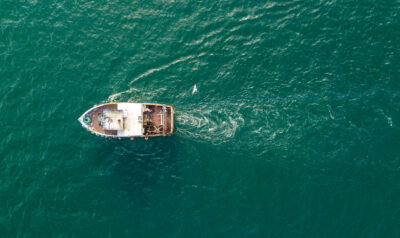
A staggering one in five fish around the world is caught illegally.
Illegal, unreported, and unregulated fishing threatens marine ecosystems, coastal communities, and the health of the ocean. The challenge is especially significant in nearshore coastal waters, where the majority of marine protected areas (MPAs) are located and marine life is concentrated. Yet the vessels operating in these areas can be difficult to monitor: globally, 90% of fishing vessels are considered small-scale, and many aren’t required to carry commercial tracking systems such as Automatic Identification Systems (AIS). Their small size also makes them difficult to detect using freely available satellite imagery.
This creates a significant enforcement gap. Small-scale vessels are responsible for nearly 40% of the world’s catch, but without reliable information on where vessels are fishing, local authorities have limited visibility into whether they’re operating legally — including whether they’re fishing inside protected areas.
WildAid is addressing this challenge by getting cost-effective, practical technology into the hands of local communities who are the first line of defense against illegal fishing. But the right tools are only part of the equation.
With 20 years of on-the-water experience, WildAid has pioneered a comprehensive approach to marine enforcement. Here is a closer look at three regions where WildAid is combining technology, capacity building, and behavior change to create a wraparound system for local marine protection.
Combatting blast fishing in the Philippines
The Philippines, located in the Coral Triangle, is home to some of the richest marine biodiversity on the planet. This ecologically significant region is under threat from illegal blast fishing — a highly destructive method that is inexpensive to carry out, but extremely difficult to catch in the act. Fishers use dynamite or other homemade explosives to stun or kill fish before harvesting them. These blasts harm not only fish, but every life form within a 100-foot radius, including slow-growing coral reefs — the very foundation of marine habitats. But by the time enforcement officers hear an explosion and reach the location, the fishing activity is already over, and offenders can toss evidence of their crime overboard to avoid arrest.
To combat this practice, WildAid has implemented two enforcement strategies: detecting blast fishing in real time as it’s happening and detecting the materials used to make fishing bombs.
The first strategy required technology that could detect blasts without being easily identified and dodged. Existing acoustic detection tools, which use sound to detect underwater explosions, were large, stationary, and highly visible. Fishers quickly learned where they were located and avoided those areas, making the tools impractical for protecting hundreds of kilometers of coastline. Enforcement officers needed something different: a mobile, discreet underwater sensor that could listen for explosions, surface when it detects one, transmit information, and then submerge again.
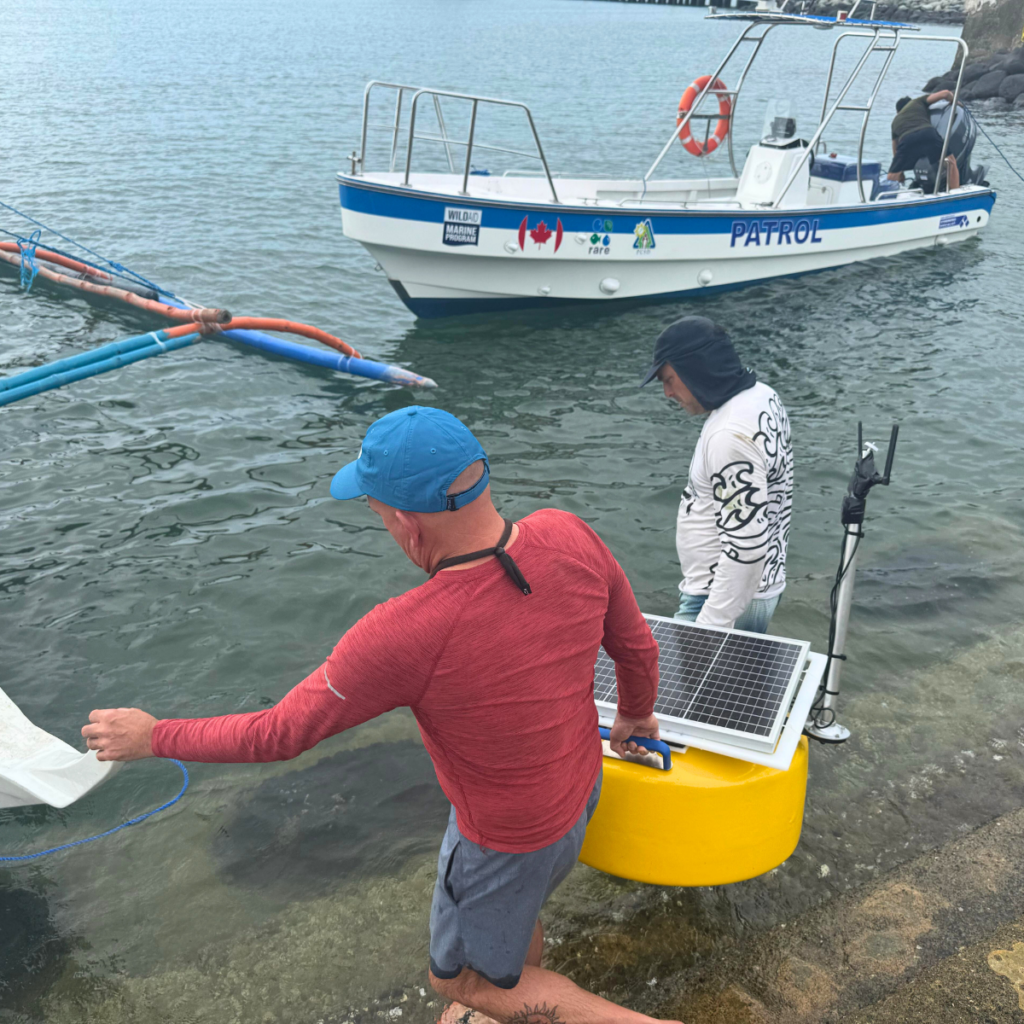
Working with our global partners, WildAid built hydrophone sensors designed to identify unusual underwater sounds — including explosions. These sensors give officers a clear signal and location, allowing hidden patrol boats to intercept blast fishers in a precise, targeted way.
The second strategy led to a surprisingly simple and inexpensive solution: swabbing the handles of outboard motors for traces of the chemicals used in homemade fishing bombs. A positive test can provide probable cause for officers to search the vessel owners’ and crews’ homes and workshops and potentially find the evidence they need.
But technology and testing were just one part of the enforcement plan. To put these to effective use, WildAid trained 80 local Bantay Dagat, or “Guardians of the Sea,” in the necessary skills and protocols to act on the information discovered, including boarding, searching, and evidence collection procedures.
The final component was deterrence. Fishers needed to be made aware that new technology and enforcement tactics were being deployed and that illegal activity would have consequences. Communicating this increased enforcement presence was essential to changing behavior and preventing the practice in the first place.
“One of the exciting aspects of our work in the Philippines is that it provides a test bed for developing an integrated approach to combat blast fishing,” said Chris Wilcox, Senior Marine Program Director. “We think this approach could help turn the tide against blast fishing in other countries as well.”
Building an enforcement system in Gabon
Gabon is home to Africa’s largest network of protected marine areas — 20 sanctuaries that, together with its coastal national parks, shelter nearly 27% of its vast ocean territory. Yet only about 5% of the network has a high level of protection from illegal fishing.
There are 750 registered small-scale vessels operating in Gabon, but existing tracking options have not been well suited to the country’s needs. At one end of the spectrum are expensive, comprehensive enforcement systems developed by large organizations that can be out of reach for developing countries with limited budgets. At the other are lower-cost tracking solutions that may provide vessel location data but don’t address the broader enforcement challenge.

Meanwhile, Gabon’s two enforcement agencies, the fisheries directorate and the national parks agency, are stretched thin, patrolling 800 kilometers of remote coastline with limited boats, budgets, and personnel. Technology can help close that gap, but only if it is designed for the realities on the ground, including affordability and the capacity to act on the information it provides.
To strengthen enforcement to combat illegal fishing in Gabon’s MPAs, WildAid launched a project supported by Minderoo Foundation, focused on strengthening every link in the enforcement chain.
Each link is another chance to change behavior: more patrols on the water; training and mentoring for officers; digital case files so no violation disappears into a drawer; and legal reforms that embed community participation in law and give sanctions real teeth.
To address the vessel-tracking challenge, WildAid is developing an innovative, low-cost tracking system using $50 solar-powered trackers and license-free long-range radios that need to be purchased only once. This will replace the existing technology that costs roughly 10 times more per boat annually. Gabon’s small-scale vessels will pilot the new technology beginning in 2027.
If successful, the approach could offer a scalable solution for monitoring small-scale fishing vessels far beyond Gabon — a critical need given that these vessels make up 90% of the global fishing fleet.
There are already early signs that this coordinated enforcement model is working. In one year, WildAid-supported patrols conducted more than 430 at-sea inspections and identified 77 fishing infractions.
Turning data into action in the Yucatán Peninsula
Where the Gulf of Mexico meets the Caribbean Sea, the Yucatán Peninsula is under serious threat from illegal, unreported, and unregulated (IUU) fishing. Since 2020, WildAid has worked with Yucatán’s fishing federations and Mexico’s park, fisheries, and naval authorities to provide training and resources to bolster community-led patrols. But in order for these patrols to be effective, crews need reliable data to decide where to go, what to look for, and how to respond.
Consider a typical boarding operation: Before approaching a vessel, patrollers need to know whether it has been boarded before, whether previous inspections uncovered violations, or whether it has already received a warning. Previously, much of this information might have been recorded with pen and paper — not the most effective strategy for sharing information across patrols and agencies.
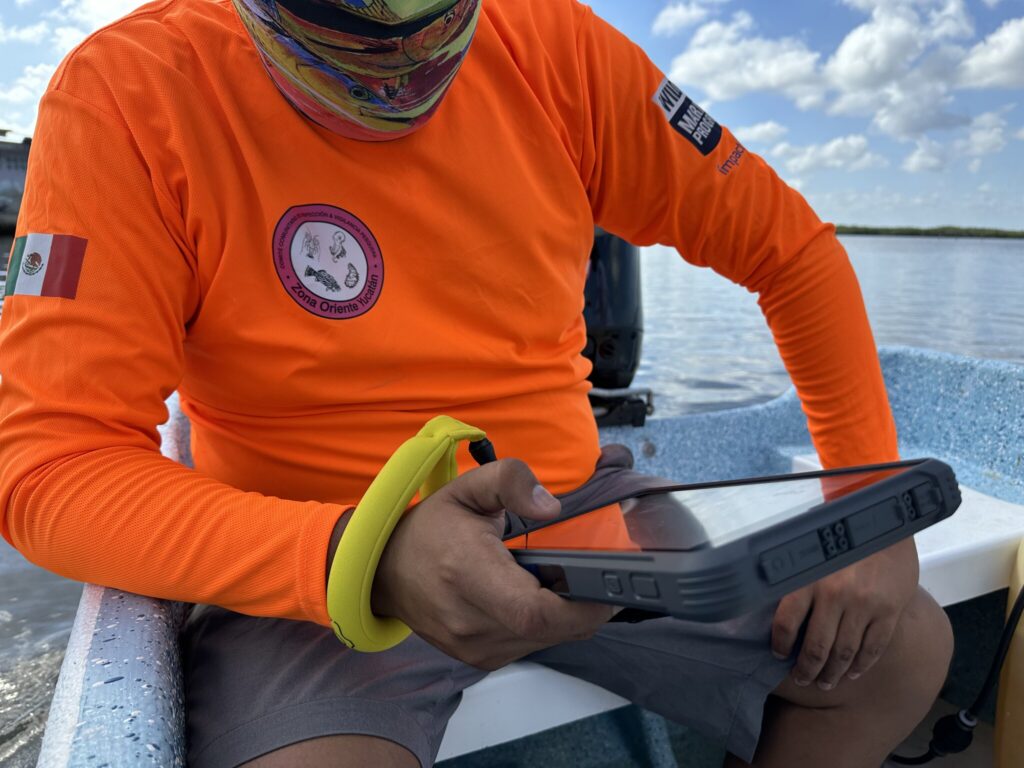
WildAid worked with partners to help digitize this process, introducing O-FISH, a tool WildAid developed to house vessel-boarding records and track illegal fishing. WildAid also trained rangers and community surveillance participants to use the tool. Data collected through O-FISH can then be integrated into EarthRanger, a software platform developed by the Allen Institute for AI (AI2) that brings information from multiple sources into one place. More than three regional fishing federations and five community surveillance committees have adopted these digital tools, and government agencies are following their lead.
But collecting better data was just the beginning. WildAid has also trained patrollers to use that data to guide enforcement — identifying patterns such as hotspots of illegal activity and repeat offenders, while following consistent procedures for boarding vessels and gathering evidence so cases can ultimately move into the hands of police or prosecutors.
The results are tangible. In just 18 months, Patrols have seized 17 illegal fishing vessels along with their contraband catch and banned gear. They have also dismantled roughly a dozen clandestine sea cucumber processing camps hidden in the mangroves of Dzilam de Bravo. Moreover, fishing communities are reporting illegal sea cucumber operations and honoring closed seasons for octopus, lobster, and grouper. As compliance increases, these species are beginning to show signs of recovery.
A shared lesson
From the Philippines to Gabon to Mexico, the challenges may look different, but the lesson is the same: technology alone can’t stop illegal fishing. When practical, right-size tools are paired with capacity building and communication strategies that change behavior, communities are better equipped to protect the waters and marine life they depend on.
Stay in touch and get the latest WildAid updates.
SIGN UP