



Critically Endangered and endemic to China, the North China leopard is a big cat that deserves the world’s attention.
To highlight conservation initiatives and encourage public support for the leopard, WildAid partnered with Ant Forest on “Defenders of the Hidden – Season 2: Where Leopards Roam”, a two-part docuseries featuring popular actor and WildAid campaign ambassador Wang Yibo, with support from the Information Office of the Qinghai Provincial People’s Government.
The North China leopard: in urgent need of attention
The North China leopard is one of eight leopard subspecies and is endemic to China. Rare and elusive, this big cat inhabits mountainous and forested areas of central and northern China.
Once widespread across the Yellow River basin, the North China leopard has suffered significant declines over the past century due to habitat loss and fragmentation. Today, they’re living in small, isolated populations that face a high risk of local extinction. The subspecies is classified as Critically Endangered on the IUCN Red List of Threatened Species.
Protecting remaining habitat, restoring ecological corridors to reconnect isolated populations, and working with local communities to prevent poaching and reduce conflicts with livestock are critical to the North China leopard’s survival.
On his participation in the docuseries, Wang Yibo shared: “I hope more people will see, understand, and know about the existence of these endangered wild animals. Then the next step is the protection of the ecological environment, so that these endangered wild animals can be better protected.”
Where leopards roam
“Defenders of the Hidden – Season 2” was shot primarily at the Ant Forest Yushu Dongzhong Conservation Area in Yushu, Qinhai Province. Recent research has revealed this well-preserved North China leopard habitat to support a small but active population.
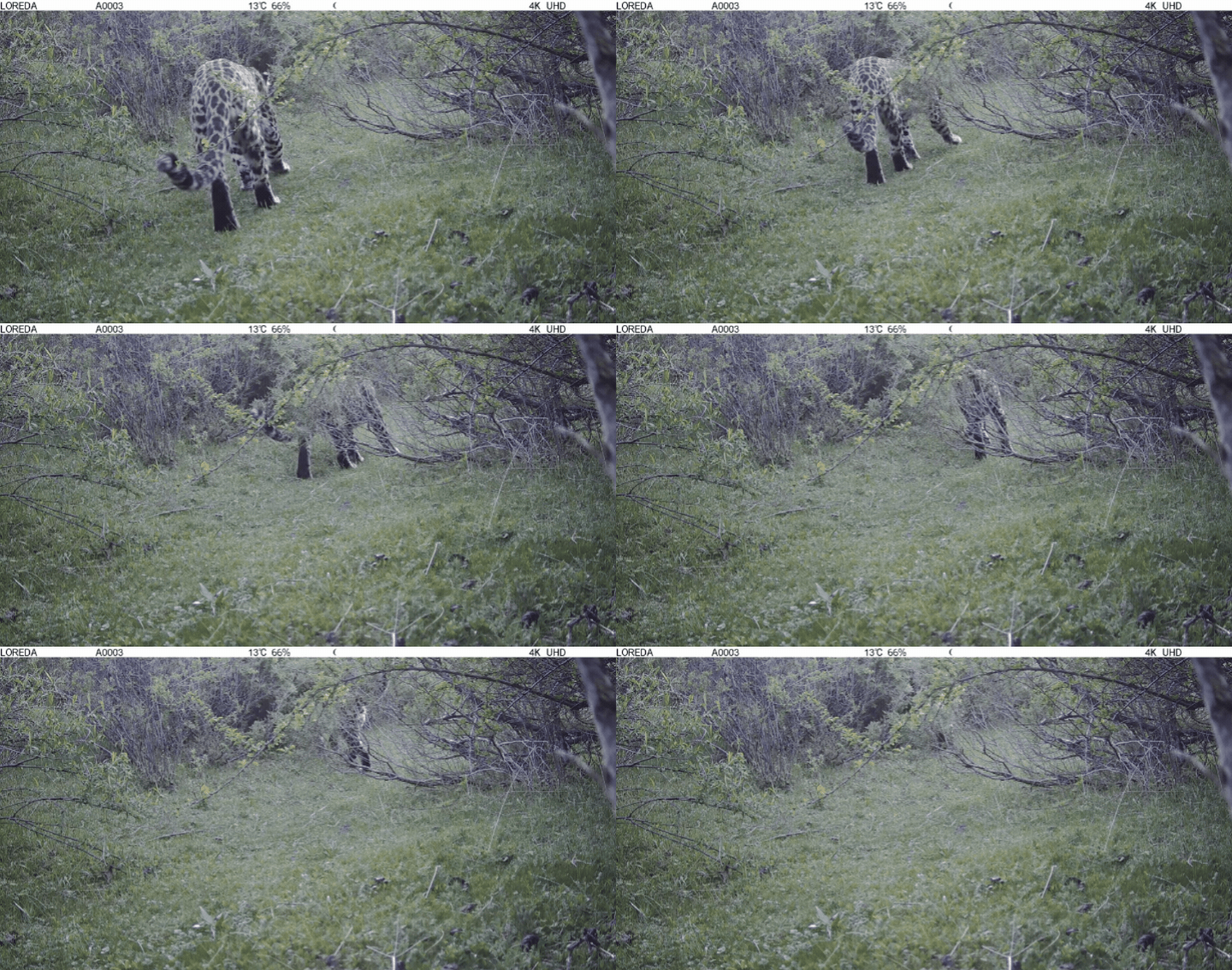
In 2017, infrared camera traps captured the first clear images of North China leopards in Yushu Dongzhong Conservation Area, a discovery that generated considerable excitement among conservationists and biologists. Continued monitoring in the area has since recorded leopard activity on multiple occasions, expanding understanding of the leopard’s range and providing crucial evidence to inform conservation strategies across regions.
Wang Yibo spent 10 days in the remote community-managed nature reserve working with field biologists, wildlife photographers, and local communities to track and document the North China leopard and other wildlife.
Building on his personal interest in photography, Yibo learned to use the video camera and captured extensive wildlife footage for the docuseries. After his mentor, wildlife videographer Jacky Poon, has to depart the reserve, Yibo takes the camera equipment into the forest on his own, continuing the quest to document the leopards.
“This was my first time spending an extended period tracking and filming wildlife. There were many challenges, but I also gained a great deal,” Yibo said. “I tried to record what I saw and felt as faithfully as possible. I hope more people will come to understand this land and the people and animals that live here through these images, and that more people and organizations will take an interest in and support the protection of North China leopard habitat.”
Conservation through communications
“Where Leopards Roam” highlights the complex habitat the leopard relies on while also documenting the efforts of local government, communities, and civil society organizations to conserve biodiversity and promote harmonious coexistence between people and nature. The docuseries builds on “Defenders of the Hidden – Season 1”, which followed Wang Yibo’s journey in search of the Chinese pangolin, offering a firsthand look at the threats to pangolins and the efforts to protect them. Season 1’s success resulted in over one million people pledging online to never consume pangolin products.
Promoting conservation through communications campaigns is central to WildAid’s mission. Raising awareness and providing education on key conservation issues, particularly with the help of trusted voices like Wang Yibo, can help build the public support that allow wildlife laws to be strengthened and enforced.
“‘Defenders of the Hidden’ is a series of stories that WildAid and its partners have created together about seeking out and protecting endangered wildlife,” said Yu Chong, Chief Representative of WildAid’s Beijing Office. “‘Defenders of the Hidden – Season 2: Where Leopards Roam’ continues these stories of discovery and protection. Beyond telling the story of the North China leopard, a native animal of China, it draws on Ambassador Wang Yibo’s footage and experiences to direct viewers’ attention to the broader issues of habitat conservation, biodiversity, and the relationship between people and nature. We hope it will inspire everyone to do their part for nature through everyday action.”
Defenders of the Hidden – Season 2 launches in Beijing
On October 20, WildAid and Ant Forest premiered the documentary at the Natural History Museum of China in Beijing. Wang Yibo, who narrates the series and plays a central role in its story, shared reflections from his journey into the plateau to learn about and help protect North China leopards.
“I think over the past seven years I’ve learned a lot about wildlife and have come to understand them better,” shared Yibo on stage at the event. “Actually, what I’ve gained most is a deeper understanding that Earth is not inhabited only by us humans; there are many more animals, and we need to find a very balanced ecological environment so that we can continue to live together on this planet.”
“Defenders of the Hidden – Season 2” generated significant interest in China ahead of its premiere. The series’ trailer garnered more than 100 million views on social media within its first 12 hours, while 2.85 million viewers tuned in to the livestream of the launch event.
The series premiered on Tencent Video on October 24, with the second episode released on October 31. WildAid will release both episodes on its YouTube channel on November 16.

From planting trees to protecting biodiversity: 10 years of Alipay Ant Forest
Alipay Ant Forest launched in 2016. Over the past ten years, the online environmental initiative has attracted more than 700 million participants in total, including 160 million people whose participation has helped plant over 700 million trees.
“As early as 2017, we began thinking about and exploring ways to do more for biodiversity,” said Wang Xiaoying, Secretary-General of the Ant Forest Foundation, at the launch event. “To date, Alipay Ant Forest and its nonprofit partners have jointly established 36 conservation areas across 16 provincial-level regions.”
According to Wang Xiaoying, the conservation area model combines ecological restoration, community participation and scientific monitoring, enabling local farmers and herders to become both participants in and beneficiaries of conservation, and fostering harmonious coexistence between people and nature.
“From national parks to nature reserves, China has established a comprehensive conservation system at the national level. Alipay Ant Forest hopes to make an additional contribution through philanthropy, primarily by supporting community-based conservation in areas that need it,” said Sabrina Peng, Chief Sustainability Officer of Ant Group, at the launch event. “We are grateful to our nonprofit partners. Their hard work has not only been captured on screen, but has also helped the idea of protecting nature take root in more people’s hearts.”
The Yushu Dongzhong Conservation Area went live on Alipay Ant Forest, in partnership with WildAid, on the day of the docuseries premiere, attracting more than 700,000 online participants in less than a day and turning awareness into action. As of October 29, there are around 2.28 million active users participating. People across China can accumulate “green energy” through environmentally friendly activities such as greener travel, reducing paper and plastic use, handling tasks online and reusing resources. They can then use this energy to support biodiversity conservation in the area through the platform. Mobile interactions such as “online patrols” also allow users to follow conservation progress and learn more about the North China leopard and the biodiversity in the conservation area.
As for next steps for the North China leopard, Li Xueyang, project lead for the Ant Forest Dongzhong Conservation Area in Yushu and scientific advisor to Shan Shui Conservation Center, said: “If this small population can grow steadily and remain healthy, the leopards may be able to disperse into suitable habitats nearby, helping drive population recovery and gene flow across a wider region. Next, we will use a more systematic camera-trap network and scientific research to assess the population’s growth potential and dispersal routes. At the same time, we will promote joint patrols across regions to create an unbroken ecological corridor for North China leopards. Our goal is not only for them to establish themselves here, but also for populations throughout the region to move freely and grow steadily.”
Stay tuned for the premiere of the full docuseries on WildAid’s YouTube channel on November 16!
Stay in touch and get the latest WildAid updates.
SIGN UP