








Pangolins are the world’s most heavily-trafficked mammals
What is a pangolin?
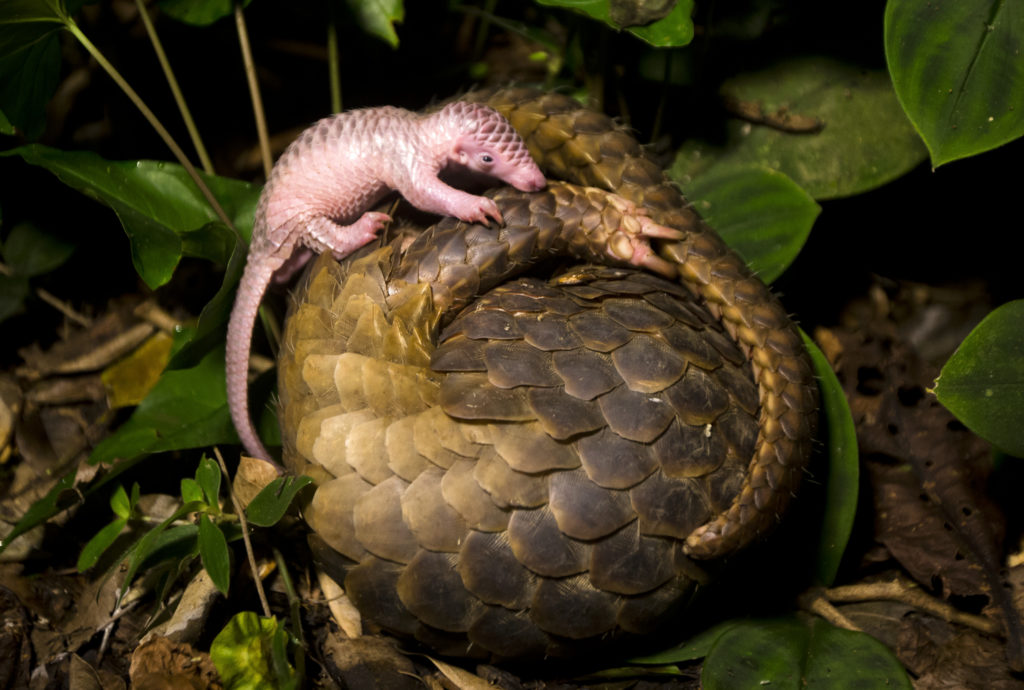
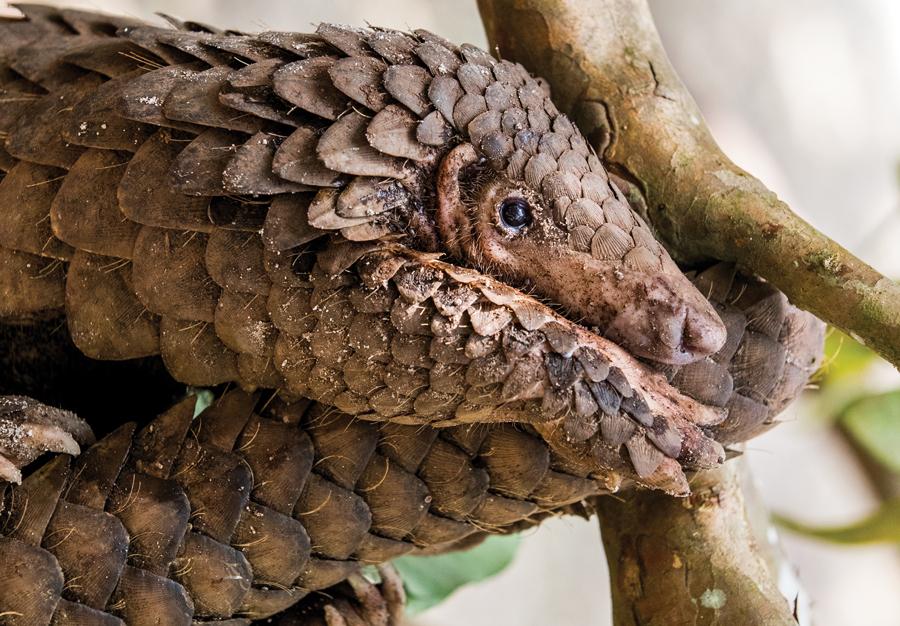
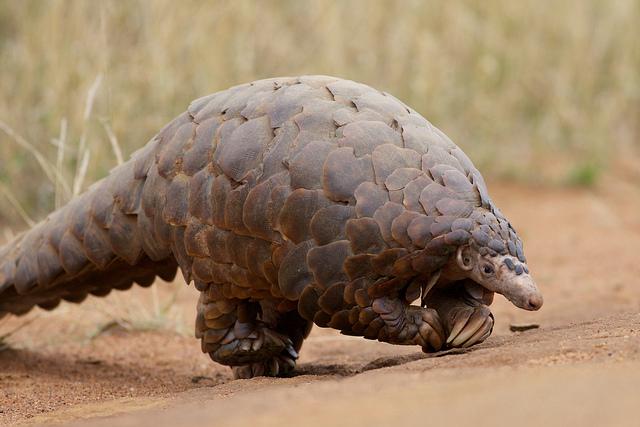
Pangolins, also called scaly anteaters, are the only mammals in the world covered in scales. They are shy, mostly nocturnal animals that eat ants and termites, and when threatened they curl into a tight ball of armor. There are eight species: four in Asia and four in Africa.
The eight pangolin species
All eight species are threatened with extinction, according to the IUCN Red List:
- Critically Endangered: Sunda pangolin, Philippine pangolin, Chinese pangolin (Asia)
- Endangered: Indian pangolin (Asia); white-bellied pangolin, and giant ground pangolin (Africa)
- Vulnerable: Temminck's ground pangolin, and black-bellied pangolin (Africa)
How many pangolins are left?
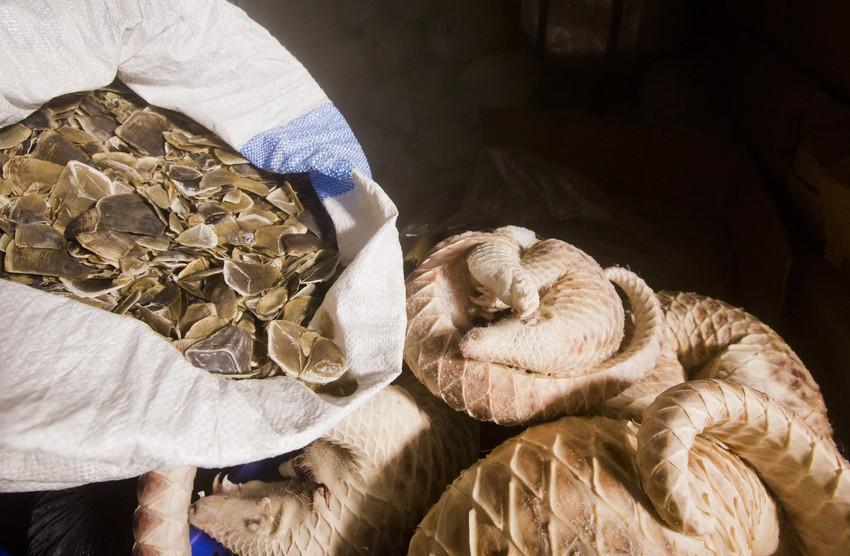
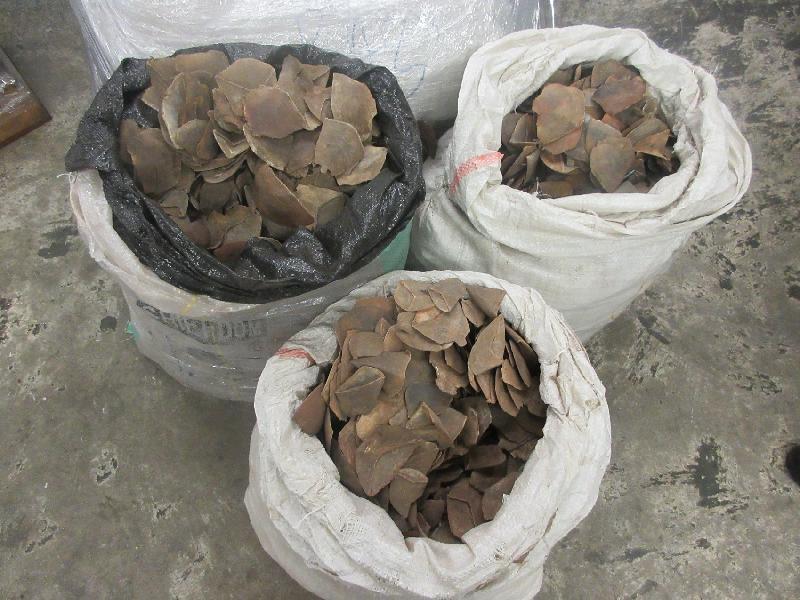
Nobody knows for certain. Pangolins are solitary, nocturnal, and rarely seen, which makes them very hard to count. What we do know comes from the trade: an estimated 200,000 pangolins are taken from the wild every year, and in the past five years authorities have seized more than 160,000 pounds of pangolin scales, equivalent to over 800,000 animals.
Our pangolin ambassadors
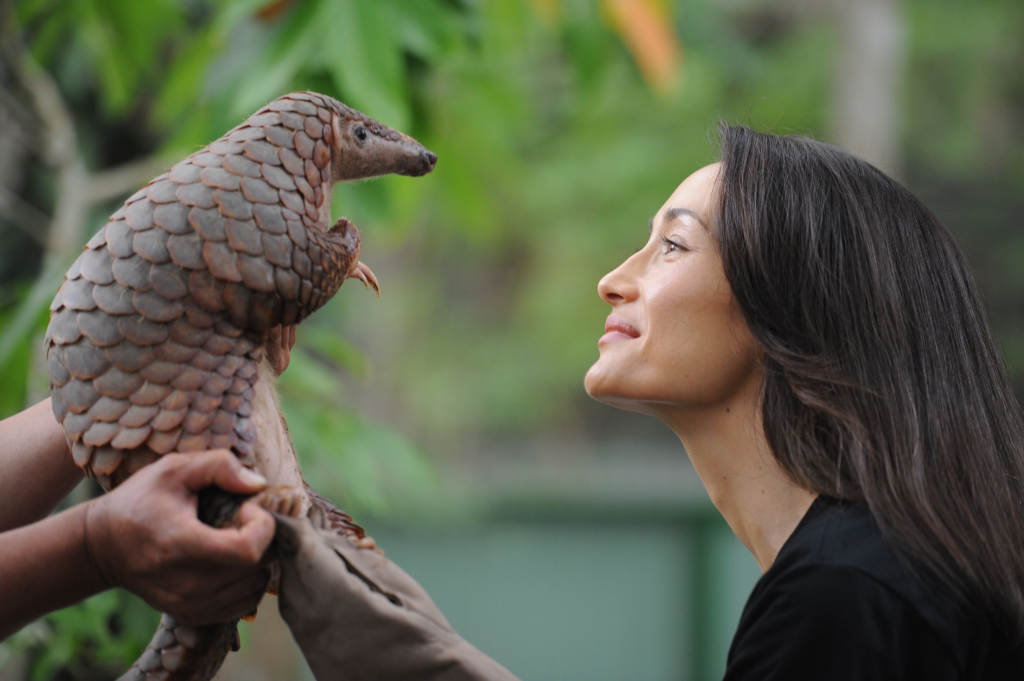
Some of Asia's and Africa's biggest stars have joined WildAid to protect pangolins, including Wang Yibo, Maggie Q, Jackie Chan, Angelababy, Pham Huong, and Cameroonian stars Mimie and Stanley Enow.
What our campaigns have achieved
- In China, belief that pangolin scales have medicinal value fell from 70% to 50% in the 18 months after our campaign began (2015–2017).
- After Defenders of the Hidden, more than one million people across China pledged on social media to reject pangolin products.
- In Cameroon, urban consumption of pangolin meat has fallen 27% since our "Say No to Pangolin Meat" campaign launched in 2022, and 29% of people who saw the campaign said it convinced them to stop.
Frequently asked questions
Are pangolins endangered?
Yes. All eight pangolin species are threatened with extinction. Three are Critically Endangered, three are Endangered, and two are Vulnerable on the IUCN Red List.
Why are pangolins trafficked?
For their meat, considered a delicacy in parts of Asia and Africa, and for their scales, used in traditional medicine even though they are made of keratin and have no proven medical benefit.
Where do pangolins live?
Across Africa and Asia, in diverse habitats from tropical forests to grasslands, wherever ants and termites are plentiful.
How can I help pangolins?
Never buy pangolin meat or products made with pangolin scales, share the facts, and support WildAid so we can keep reducing demand where it is highest. Learn more in 10 Things You Didn't Know About Pangolins.
Help protect pangolins. Donate to WildAid · Get pangolin updates by email
- 800,000
In the past five years alone, authorities across the world have seized more than 160,000 lbs of pangolin scales, equivalent to over 800,000 animals. The number actually hunted and killed will be many times higher. - 27%
The decline in urban consumption of pangolin meat in Cameroon since WildAid launched its “Say No to Pangolin Meat” campaign in 2022. - 70 million
The number of ants and termites a single pangolin can eat in a year.
Making an impact
WildAid has been on the front lines of the fight for pangolins for nearly a decade, launching its first public awareness campaign in 2016 aimed at eliminating demand for pangolins in the world’s two largest markets – China and Vietnam. We employ behavior change campaigns designed to educate consumers and make consumption of pangolin products socially unacceptable. Enlisting the power of ambassadors like Jackie Chan and Chinese superstar Wang Yibo, and working closely with government and media partners, we have reached some 1.5 billion viewers in these countries, with our messaging showing across dozens of TV networks and on over 16,600,000 video screens in subways, airports, bus stops, hospitals, and shopping centers.
In 2020, China increased protection for the native Chinese Pangolin to the highest level, reinforced a ban on consumption of pangolin meat along with a ban on all wildlife consumption as food, and removed pangolin scales from a list of approved ingredients to be used in Traditional Chinese Medicine. With the upgrade in protection came an increase in efforts to understand pangolins, particularly through research and monitoring.
As more infrared camera monitoring projects roll out in pangolin habitats across the country, more “surprise shots” of Chinese pangolins are being captured. These images reveal an improvement in habitat conditions and an uptick in their numbers in the wild! In order to bring awareness to this initiative, WildAid ambassador Wang Yibo recently joined us on a field mission to help set up some of these cameras personally. We documented his journey in a short film that highlights China’s efforts to bring back their pangolins, aiming to inspire viewers around the world to become pangolin champions. The premiere of this film in China in August 2024 attracted 5.1 million live-streaming viewers.
At the same time, traditional Chinese Medicine practitioners, researchers, educators, and distributors from around the world have launched a new initiative to preserve global biodiversity by committing themselves to abstain from using endangered species in their healing practices. Meanwhile, in China, 55% of practitioners responding to our 2023 survey indicated a willingness to try medications containing alternative ingredients to pangolin scales in their practice.
However, these optimistic signs should not obscure the fact that significant loopholes in policy and enforcement remain in China, and scales are still widely used and freely advertised by pharmaceutical companies.
With a sharp decline in the availability of pangolins in Asia, traffickers have largely turned their focus to sourcing pangolins and their scales from Africa. Hunters and poachers have turned from their traditional role of killing pangolins for food (bushmeat) to actively hunting to satisfy the demand from Asia. Around 90% of the pangolin scales seized since 2015 originated from Africa, with over 128 tonnes intercepted in 2019 alone.
Cameroon is a major source country for pangolin scales, while Nigeria has proven to be a major transit hub for the trafficking of pangolin scales from Africa to Asia.
With this in mind, WildAid has carried out intensive campaigns in Cameroon and Nigeria aimed at raising awareness about the plight of pangolins.
In Cameroon, our campaign has focused on reducing the urban consumption of pangolin meat, which has reached unsustainable levels. The “Say No to Pangolin Meat” campaign has been backed by some of Cameroon’s leading musicians, footballers, and traditional leaders, and has achieved remarkable results since its launch in 2022.
Awareness of the law banning the capture and killing of pangolins has more than doubled in the past two years, with 62% of city dwellers correctly saying that all pangolin species are protected in 2024, up from 29% in 2022.
In the cities and towns of Yaoundé, Douala, Ebolow,a and Mbalmayo, the number of people who said they consume pangolin meat once a month or more frequently fell to 10.3% in 2024, down from 14.1% in 2022. That’s a decline of 27%.