


Ghost nets put entire ecosystems at risk.
This lost or discarded fishing gear can drift for years, ensnaring marine animals, damaging coral reefs, and degrading slowly into harmful microplastics. When entangled in coral, ghost nets break fragile structures, block sunlight critical for photosynthesis, and introduce harmful bacteria that accelerate coral disease.
We’re tackling this issue head-on in China. In observance of the 18th World Oceans Day, under the guidance of the First Institute of Oceanography, Ministry of Natural Resources and with the support of the China Fisheries Vessel, Machinery and Gear Association, we teamed up with marine conservation group Narwhal Ocean Research Center to launch the “No Nets Left Behind” ghost fishing gear removal campaign in Wanning, Hainan from May 28 to 29. The underwater cleanup aimed to eliminate marine plastic pollution and safeguard coral reef ecosystems while drawing wider public attention to ecological hazards posed by abandoned fishing gear.
A total of 13 professional divers took part in the underwater operations. After two rounds of diving and salvage work, the team cleaned nearly 21,500 square feet of seabed — an area about half the size of a football field — and retrieved nearly 90 pounds of marine debris, primarily ghost fishing nets.
Abandoned, lost or discarded fishing gear is one of the major sources of global marine plastic pollution and a silent killer to marine ecosystems. A study on marine plastic pollution published in Science in 2024 confirmed that abandoned fishing gear is a leading cause of persistent plastic accumulation in inshore and open oceans. Compared with ordinary plastic waste, ghost nets and other fishing debris have a far longer degradation cycle and cause more severe ecological damage.
Ghost fishing nets easily entangle and injure marine life. They also cling to and cover coral reefs, blocking sunlight for photosynthesis and leading to coral breakage and bleaching. Such debris severely damages key marine ecosystems including coral reefs and seagrass beds, weakening the ocean’s capacity to heal itself amid climate change. It also undermines fisheries, hinders marine economic development, and affects the livelihoods of coastal communities. Systematic solutions including regular removal, full-chain supervision, and recycling are urgently needed to address this crisis.
WildAid has long committed itself to tackling marine plastic pollution and protecting marine biodiversity. In October 2024, we launched the “No Nets Left Behind” Partner Program, bringing together environmental groups, corporations, research institutions, and media to build a collaborative governance platform. The program focuses on ghost net removal, recycling and reuse of discarded fishing gear, and pollution source control, striving to establish a comprehensive and long-term marine protection system.
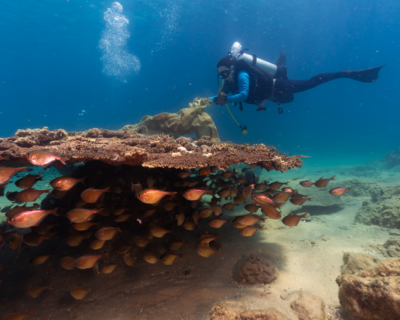
The cleanup took place in a coral reef area that has been under long-term protection by the project team. During last year’s removal effort, divers discovered a table coral tightly entangled in ghost nets and showing signs of bleaching caused by prolonged coverage. The team quickly removed the fishing gear, giving the coral a chance to recover.
When divers returned this year, they were greeted by an incredible sight: the coral was regaining its natural color, and schools of fish of various species had returned to the reef around it! This progress is a powerful reminder that when given the chance, the ocean can recover.
Li Auto has joined the “No Nets Left Behind” Partner Program as a new member and provided support for these efforts. Zhang Mengqi, Head of Corporate Social Responsibility at Li Auto, stated, “The remediation of marine pollution caused by abandoned fishing gear connects marine ecological protection and circular economy, and it is also an important area for businesses to fulfill social responsibilities. Our collaboration with WildAid and Narwhal Ocean Research Center on the salvage operation in Wanning marks a key attempt at the front end of resource-based management of discarded fishing gear. From removing existing ghost nets underwater to exploring high-value recycling of waste fishing gear, we aim to protect the ocean through diversified and concrete actions and bridge ecological conservation and circular economy. Centered on the philosophy of ‘connecting with kindness’, we encourage our staff, car owners and business partners to take joint action to build a sustainable marine ecosystem for the well-being of all.”
Today, the “No Nets Left Behind” Partner Program brings together 13 organizations committed to protecting marine ecosystems from the threat of abandoned fishing gear. Through ongoing collaboration, partners conduct marine debris cleanups, monitor ecosystem health, support waste recycling efforts, and engage local communities through environmental education.
In celebration of World Oceans Day on June 8, the partnership hosted a series of online and in-person conservation activities to raise awareness of ocean protection and responsible waste management. By sharing solutions, strengthening collaboration, and inspiring action, the program aims to build lasting support for healthier oceans and more resilient marine ecosystems.
Stay in touch and get the latest WildAid updates.
SIGN UP